What actually happens on your first flying lesson?
The headsets, the checklist, the unfamiliar instruments—and the moment an ordinary airport becomes something else.
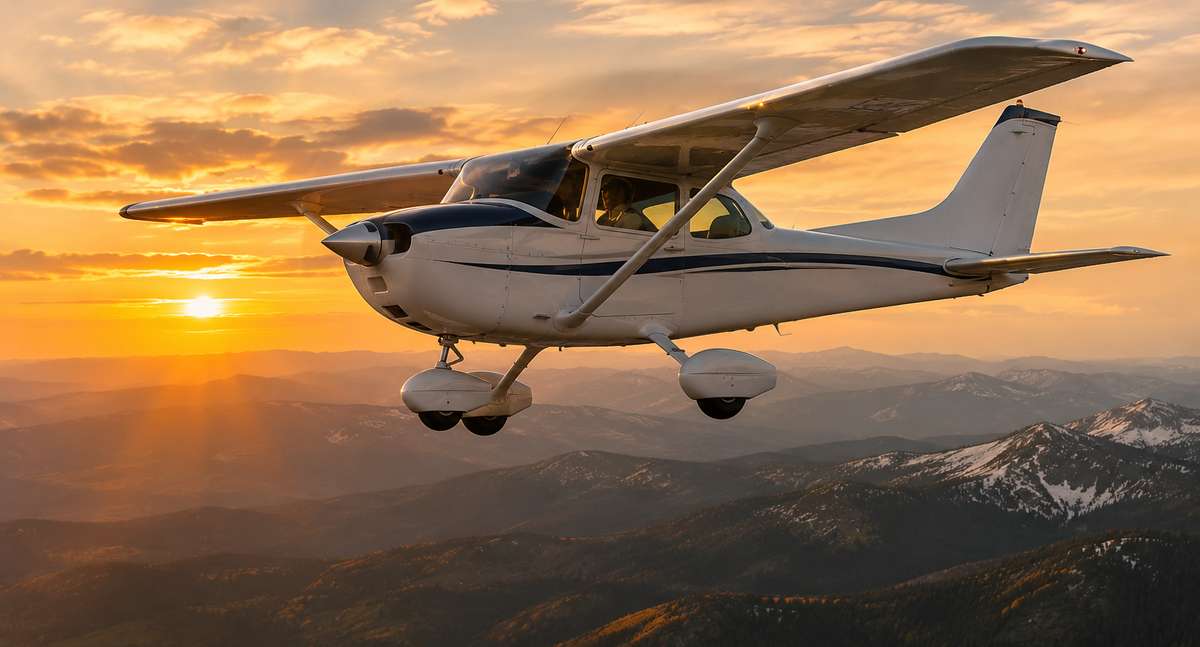
A first flight lesson usually begins long before the engine starts. You meet an instructor, walk around an airplane, and discover that flying is a sequence of understandable decisions—not one heroic leap into the unknown.
The airplane is smaller than you imagined
Most introductory flights take place in light training aircraft. In the cabin, you are close enough to the instructor to see every action and ask questions as they happen. The windows offer an unusually direct relationship with the world outside. You can see the runway, the horizon, and the way the airplane changes its attitude when the controls move. Nothing about the space is mysterious once someone takes the time to explain it.
Before the propeller turns
The instructor will usually introduce the preflight inspection: the deliberate walk around the aircraft that checks its condition before departure. You might look at the wings, control surfaces, landing gear, fuel quantity, and other visible parts. Inside, there will be a checklist. This is one of the first important surprises of aviation. Professionalism here does not mean trusting your memory. It means building habits that catch mistakes before they become problems.
The moment the ground begins to move
Taxiing is not like driving a car, and the runway is not just another road. The instructor manages radio calls, clearances when required, and the pace of the lesson. On departure, the airplane accelerates, the wheels become light, and the pavement falls away. A familiar landscape becomes a map of roads, buildings, fields, and coastlines. The experience can be exhilarating and a little strange at the same time.
You may get to fly
Under an instructor's supervision, many introductory students have an opportunity to feel the controls. A gentle turn starts with small, coordinated movements. Climbing is not simply pulling up, and descending is not simply pointing down. Airspeed, pitch, power, and trim become real sensations instead of terms on a page. The instructor determines what is appropriate for the aircraft, conditions, and student.
After landing
The lesson often ends with a short debrief. What felt natural? What surprised you? What would the next lesson cover? There is no commitment required just because you tried flying once. The FAA says you do not need a student pilot certificate merely to begin lessons; the certificate is required before solo flight. FAA guidance on beginning pilot training.
A useful way to prepare
Wear comfortable clothes, bring questions, and ask the instructor about weather, what you'll see, and what part of the lesson you may handle. Avoid measuring the experience by whether you perform well. At the beginning, you are supposed to be learning. The better question is whether you leave curious enough to understand a little more.